Designing for the Future: How to Choose School Furniture for Modern Classrooms
Traditional classrooms featured rows of heavy, static desks facing a blackboard. Today, education is shifting towards active learning—a dynamic approach that encourages student collaboration, critical thinking, and movement.
To support this shift, modern classrooms require flexible furniture. Here is how to choose school desks and chairs that foster collaboration, creativity, and engagement.
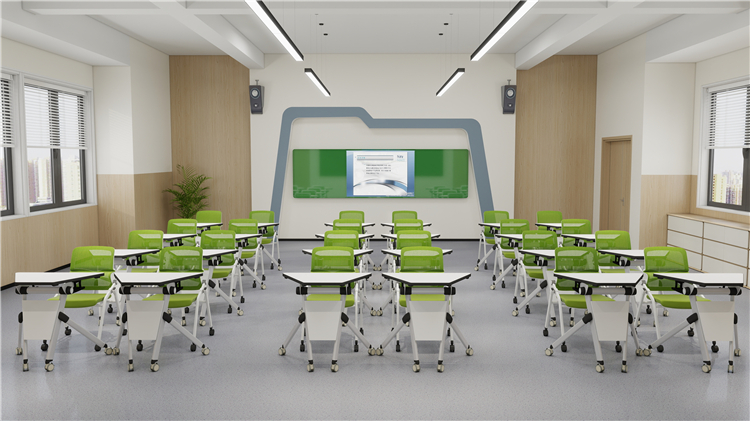
1. Embrace Flexibility and Mobility
In a modern classroom, the layout needs to change quickly. A teacher might start the day with a lecture, transition to small group work, and end with an open-floor discussion.
To facilitate this, choose mobile furniture:
- Caster Wheels: Desks and chairs equipped with lockable casters allow students to rearrange the classroom in seconds without noisy scraping sounds.
- Lightweight Designs: Select chairs made of high-density polypropylene that are easy for even young students to lift and move.
- Stackable Chairs: Stackable seating is perfect for saving space when the classroom floor needs to be cleared for activities.
2. Choose Modular and Shaped Desks
Rectangular desks limit classroom layouts. Modern modular desks can be combined like puzzle pieces to create different configurations.
- Trapezoid, Triangle, and Wave Shapes: These shapes allow desks to be grouped into pods of three, four, or six for collaborative group projects, or aligned in a semi-circle for class discussions.
- Individual to Group Transition: An ideal student desk should work perfectly as a standalone unit for individual testing, yet easily merge into a group cluster when needed.
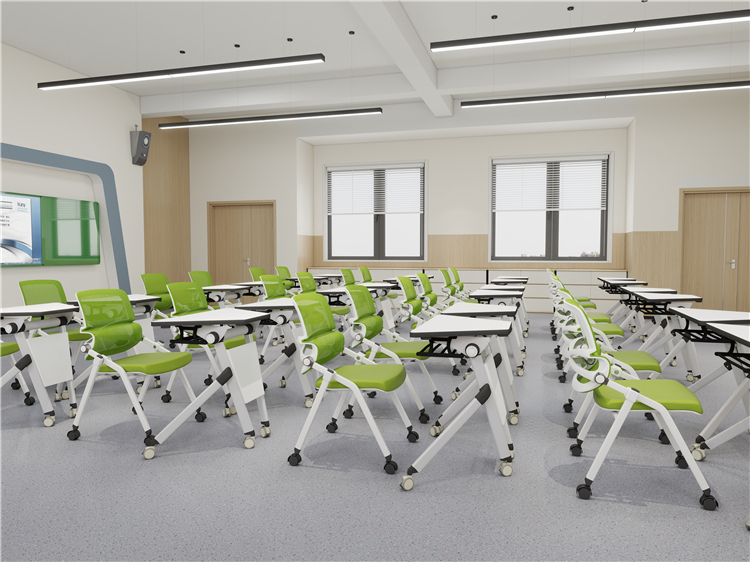
3. Support Active Sitting
Students naturally have a lot of energy. Forcing them to sit completely still can actually hinder their concentration. Modern school seating incorporates “active sitting” concepts:
- Flexible Shells: Chairs that allow a slight flex or rock encourage micro-movements, which help channel energy, improve blood flow, and keep students focused.
- Stools and Wobble Chairs: Incorporating a few ergonomic wobble stools into the classroom gives students who struggle with attention a healthy outlet for movement.
4. Consider Integrated Storage and Smart Features
As classrooms become more digitized, the demand on desk space changes. Look for desks and chairs that offer intelligent storage and connectivity solutions:
- Under-Seat Book Baskets: Keep backpacks off the floor and walkways clear by choosing chairs with built-in storage racks.
- Tablet/Cup Holders & Cable Management: Modern desks with built-in tablet slots, bag hooks, and grommets for cable routing help keep student workspaces organized and clutter-free.
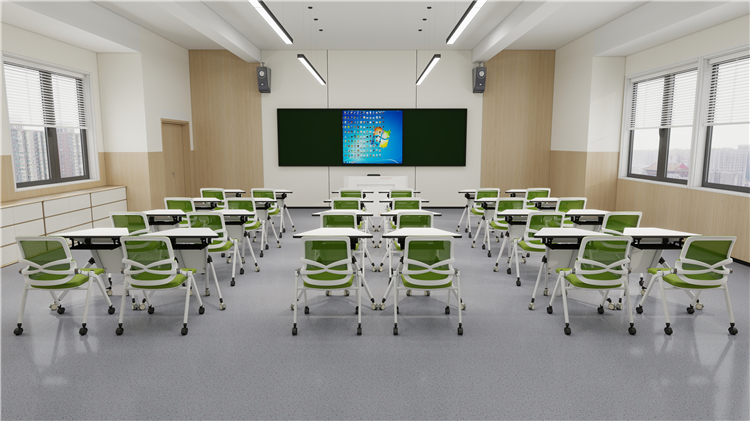
Summary: Create an Inspiring Learning Space
The physical environment acts as the “third teacher.” By selecting flexible, collaborative, and modern school desks and chairs, you empower teachers to utilize diverse teaching methods and help students prepare for a highly collaborative future.
Transform your learning spaces today. Browse our collection of innovative, modular, and collaborative school furniture. [Request a free classroom spatial design consultation now!]